🇨🇭 Canton guide
Appenzell Innerrhoden: living, going out and working in the canton
Everything about the canton of Appenzell Innerrhoden: Landsgemeinde, politics, tax for cross-border workers (outside the 1983 agreement), transport, specialities, museums, the Alpstein, traditions, and an interactive map.
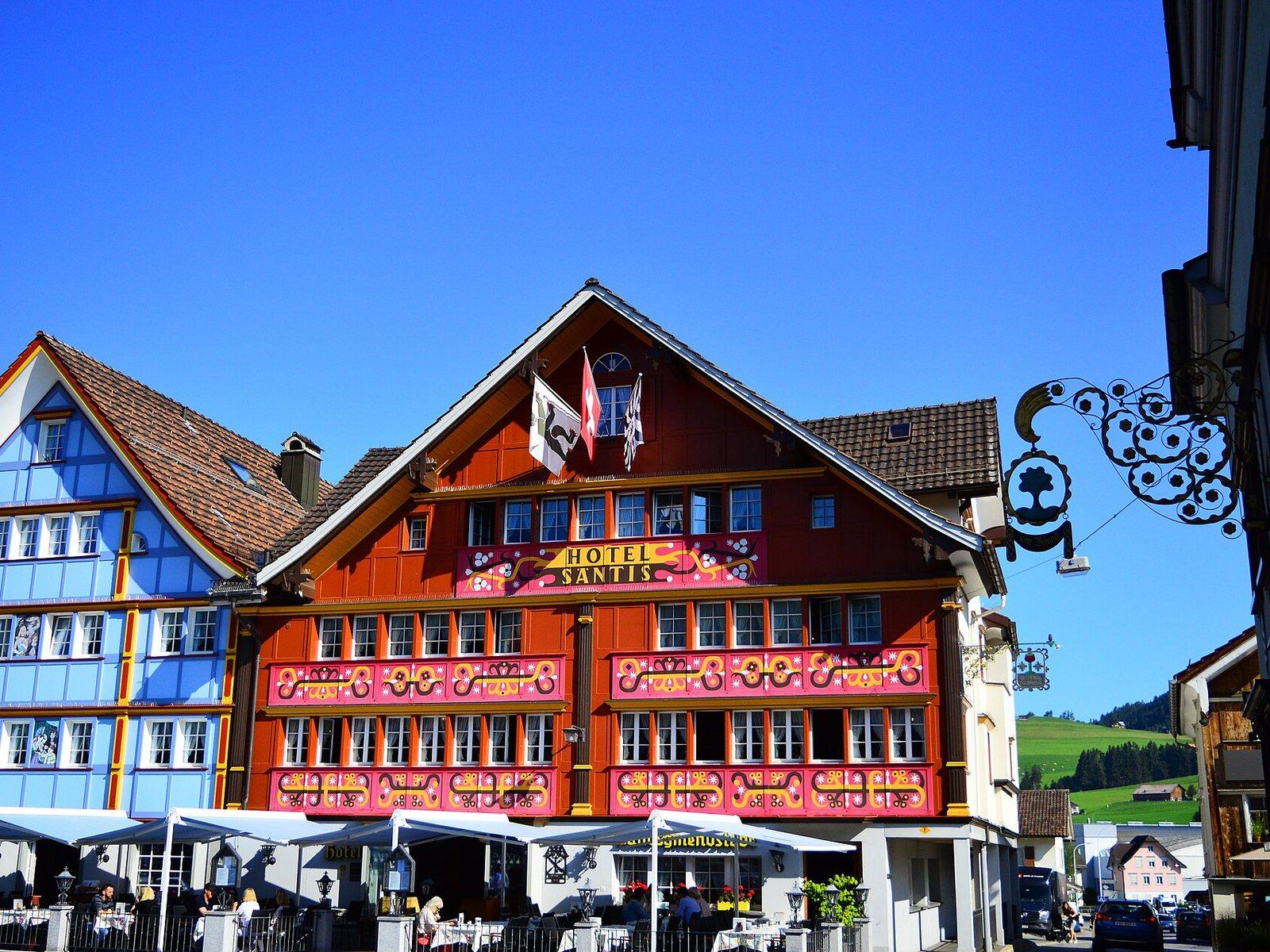
Photo (cropped): Barbara Steinemann, CC BY-SA 4.0, via Wikimedia Commons
- residents at the end of 2025 (Federal Statistical Office)
- 16,890
- of the population are foreign nationals (calculated, end of 2025)
- 13.0%
- in Switzerland: the canton is not in the 1983 agreement
- At source
- Landsgemeinde: last Sunday of April (Constitution, art. 19)
- 25 April 2027
10 sections≈ 11 min readSources checked on November 6, 2026
The interactive map
30 places marked: landmarks, museums, transport, restaurants, nights out and events. Tap a point to learn more.
Loading the map…
Places on the map (30)
Base map © swisstopo · Places: © OpenStreetMap contributors. When the map appears, your browser loads the tiles from the servers of the Swiss Confederation (swisstopo), which can see your IP address.
Appenzell Innerrhoden is a small Alpine canton where people still vote in the open air: every year, its voters gather on the village square of Appenzell for the Landsgemeinde. It is made up of five "districts" and borders the Alpstein massif. It has no border with another country and is not one of the eight cantons of the 1983 agreement: for a French cross-border worker, that means you are taxed at source in Switzerland, at the ordinary scales, and not in France as in Basel or Neuchâtel.
This page gathers what you need to know to live, go out and work in Appenzell Innerrhoden: language, politics, tax, transport, food and specialities, museums, nature, traditions. The figures come from official sources listed at the bottom. Venues open, close and change their hours: always check with them before you travel. The interactive map further down places the five districts and sites in the Appenzell and Alpstein region.
1. Appenzell Innerrhoden at a glance
| Marker | What to know |
|---|---|
| Population | 16,890 inhabitants at the end of 2025 (permanent resident population) |
| Foreign nationals | 2,195 people, or 13.0%; 14,695 Swiss citizens |
| Districts | Appenzell (6,191 inh.), Schwende-Rüte (6,194), Oberegg (1,934), Gonten (1,480), Schlatt-Haslen (1,091) |
| Capital | Appenzell, seat of the cantonal authorities (art. 15) |
| Supreme authority | Landsgemeinde, every year, on the last Sunday of April (art. 19) |
| Government | Standeskommission of 7 members, elected every year by the Landsgemeinde (art. 20) |
| Parliament | Grand Council of 50 seats (art. 22), meeting five times a year (art. 23) |
| Tax for French cross-border workers | At source in Switzerland (outside the 1983 agreement) |
| Places that come up often | Appenzell, Weissbad, Wasserauen, Brülisau, Gonten, Alpstein |
The share of foreign nationals is calculated from the figures in the Federal Statistical Office's "resident population" table (2025). The Constitution is dated 24 November 1872; the version read is the one of 1 May 2022. In 1597 the canton of Appenzell split into two cantons: Ausserrhoden and the smaller Innerrhoden.
2. The language
The Constitution we read contains no provision on the official language: we therefore do not state one. The official texts we read (Constitution, state pages) are in German, and the contract, payslip and forms generally are too. The tourist board devotes a section to the Innerrhoden dialect ("Innerrhoder Dialekt").
No main-language statistics were read: we therefore give no percentage of French speakers.
3. How the canton is governed
| Institution | What the Constitution says |
|---|---|
| Landsgemeinde | Supreme authority, meeting on the last Sunday of April (the first Sunday of May if Easter falls on that day); legislator and highest electoral body; vote by show of hands (art. 1, 19, 20, and Appenzell's site) |
| Standeskommission (government) | 7 members elected every year: the sitting Landammann (not re-eligible the following year after two years), the outgoing Landammann, the Statthalter, the Säckelmeister, the Landeshauptmann, the Bauherr and the Landesfähnrich (art. 20) |
| Cantonal court | A president and twelve members elected by the Landsgemeinde, each district being represented (art. 20) |
| Grand Council | 50 seats; each district first receives four seats, the other 30 are distributed in proportion to population; it sits five times a year (art. 22 and 23) |
| Popular initiative | Any voter may submit an initiative (art. 7bis) |
| Referendum | Mandatory for a free one-off expenditure of at least CHF 1 million or a recurring one of at least CHF 250,000 over four years; optional: 200 voters within 30 days for at least CHF 500,000 or CHF 125,000 a year over four years (art. 7ter) |
| Right to vote | Swiss citizens aged 18 or over, domiciled in the canton and on the register (art. 16); compulsory attendance at Landsgemeinden (art. 17) |
Parishes may grant the right to vote and stand for election to their foreign members holding a settlement permit (art. 16). Resident foreigners do not vote at cantonal level; a cross-border worker has no right to vote in the canton.
4. Working in Appenzell Innerrhoden as a cross-border worker
| Point | What we read |
|---|---|
| 1983 agreement | The Federal Council signed it on behalf of Bern, Solothurn, Basel-Stadt, Basel-Landschaft, Vaud, Valais, Neuchâtel and Jura: Appenzell Innerrhoden is not part of it |
| Fribourg tax office | According to its instructions, the agreement "concerns only" these eight cantons |
| Aargau | Its tax office describes the situation of a canton outside the agreement: French cross-border workers are taxed at the ordinary scales (A, B, C, H), with a tax credit in France |
| Cantonal source-tax page | New scales valid from 1 January 2026; the employer withholds and pays over the tax and receives a collection commission of 2% of the amount paid; the relevant gross salary includes all supplements (bonuses, 13th-month pay, tips, allowances…) |
| Cantonal minimum wage | Not read; check the collective agreement of your sector (see our guide on the CCNT) |
| Number of cross-border workers | Not read |
5. Getting around
| Mode | What we read |
|---|---|
| Appenzeller Bahnen | Regional railway; the tourist board also lists PostAuto buses and a PubliCar (on-demand bus) |
| Parking | From this winter, parking is free in selected car parks at Wasserauen and Brülisau on days when the ski lifts operate (announcement by the canton) |
| Wasserauen – Ebenalp cable car | Closed from 2 November to about 18 December 2026 (overhaul) |
| Jakobsbad – Kronberg cable car | Departures on the hour and half hour; mountain restaurant |
| Hoher Kasten | Eight-minute cable car from Brülisau to 1,794 m; first ascent 8:40 am, last descent 4:40 pm at the time of reading |
| Roadworks | Renovation of the Haslenstrasse and a new footpath and cycle path between Appenzell and Haslen, from 11 November 2026 |
We did not read a network map, timetables or fares. Check your journey on the SBB site before choosing where to live.
6. Eating and drinking
| Place | What we read |
|---|---|
| Brauerei Locher (Appenzell, Brauereiplatz 1) | Family brewery since 1886, fifth generation, more than 40 beers; "Brauquöll" visitor centre with a shop, tastings on request and Säntis Malt Whisky |
| Appenzeller Alpenbitter (Weissbadstrasse 27) | Drink created in 1902 by Emil Ebneter, recipe unchanged, 42 herbs and spices |
| Bärli-Biber (Weissbad) | Gingerbread speciality from the Bischofberger house: Bärli-Biber, Bärli-Biberli, Bireweggli |
| Berggasthaus Bollenwees | Mountain inn on the shore of the Fählensee |
| Specialities | According to the tourist board: Appenzeller Käse, Biber, Chäsflade, Klübler / Pantli, Berewegge, Landsgemeinde-Chrempfli, raclette and fondue |
| Company visits | Bärli-Biber-Welt, Alpenbitter, Brauquöll, Breitenmoser Gustarium, Goba, Schaukäserei |
The tourist board's site also sorts restaurants by locality and category ("Gault Millau", "Italian", "terrace"…). No list of names was read: we therefore give no restaurant addresses beyond those above.
7. What to see and do
Appenzell and its museums
| Place | What we read |
|---|---|
| Landsgemeindeplatz | The historic square where the Landsgemeinde is held every year; all cantonal elections and items are discussed there and voted by show of hands |
| Heiligkreuzkapelle (Hauptgasse) | Rebuilt after the village fire of 1560; stained glass by Ferdinand Gehr (1964) on the five sorrowful mysteries of the rosary |
| Löwen Drogerie (Hauptgasse 20) | Painted façade, a "jewel": Johannes Hugentobler depicted medicinal herbs on it |
| Museum Appenzell (Hauptgasse 4) | Permanent exhibition "Spetzlistich, Rosenkranz und Bärenzahn"; Tuesday to Friday 10 am – 12 noon and 1:30 – 5 pm, Saturday, Sunday and public holidays 11 am – 5 pm; closed on 24 and 25 December 2026; reduced rate CHF 7 |
| Kunstmuseum and Kunsthalle Ziegelhütte (Unterrainstrasse 5 / Ziegeleistrasse 14) | Art and "Ringofenkonzert" concerts; addresses in Appenzell |
| Museum Appenzeller Bahnen (Wasserauen) | Cited by the tourist board among the canton's museums |
| Kommandobunker Grenzbrigade 8 (Haslenstrasse) | Cited by the tourist board among the canton's museums |
The Alpstein
The tourist board highlights the "pearls of the Alpstein": the Wildkirchli ("not only for cave dwellers"), the Fählensee, the Sämtisersee, the Meggelin adventure trail at Meglisalp, Roman Signer's power-station sculpture and the Seealpsee. It also lists twelve mountain inns (Bollenwees, Ahorn, Äscher, Alpenrose, Ebenalp, Eggli, Forelle, Hoher Hirschberg, Hoher Kasten, Kronberg, Lehmen, Meglisalp) and offers "4 Berge – 1 Ticket". The massif belongs to the cantons of Appenzell Innerrhoden, Appenzell Ausserrhoden and St. Gallen.
8. Bars, cellars and nights out
| Venue | What we read |
|---|---|
| ink Appenzell (Engelgasse 3) | "Art, culture and coffee" in the former printing house of the "Appenzeller Volksfreund"; concerts without tickets or reservations, free entry with a collection |
| Roothuus Gonten | Cited by the tourist board in the Appenzell music section; programme not read |
No official list of bars or clubs was read: we kept only the venues whose sites we read.
9. Traditions and highlights
| Event | When | What it is |
|---|---|---|
| Gewerbemesse A26 | 13 to 15 November 2026 | Trade fair, held on the "Sandgrube" site in Appenzell |
| Lichterzauber at the Hof Weissbad | 16 to 30 January 2027, every evening | "Lichterzauber" (magic of lights) announced at the Hof Weissbad |
| Ringofenkonzert | Date not read | "Acoustic Voyagers & Wooden Impact" concert at the Kunsthalle Ziegelhütte |
| Landsgemeinde | 25 April 2027 (last Sunday of April) | Vote by show of hands on Appenzell's square |
| Customs | Dates not read | Fasnacht, Funkensonntag, Stosswallfahrt, Fronleichnam, Alpfahrt, Viehschau, Chölbi, Chlausezüüg |
Sources
- Constitution of the canton of Appenzell Innerrhoden (101.000): version of 1 May 2022; art. 1, 7bis, 7ter, 15, 16, 17, 19, 20, 22, 23. Text in German.
- Federal Statistical Office: resident population (table px-x-0102010000_101, 2025): population, foreign nationals, districts.
- Agreement of 11 April 1983 on the taxation of cross-border workers; Fribourg tax office: "source tax" instructions; Aargau tax office: information sheet on the taxation of cross-border workers.
- Canton of Appenzell Innerrhoden: source tax and the canton's home page.
- Site guides, checked against official sources: G permit, contract and salary (CCNT).
- Appenzellerland Tourismus (Appenzell): Alpstein, museums, products, traditions, transport; Museum Appenzell; Kunstmuseum and Kunsthalle; ink Appenzell.
- Companies and cable cars: Brauerei Locher and Brauquöll, Appenzeller Alpenbitter, Bärli-Biber, Hoher Kasten, Kronberg, Ebenalp, Berggasthaus Bollenwees, Gewerbemesse A26.
- Map coordinates: © OpenStreetMap contributors; base map © swisstopo.
Want to work in Appenzell?
Browse the canton's job listings, or discover the programme that prepares you for the application, the interview and the employment contract.
Switzerland — all 26 cantons