🇨🇭 Canton guide
St. Gallen: living, going out and working in the canton
Everything about the canton of St. Gallen: institutions, tax for cross-border workers (outside the 1983 agreement), Stiftsbezirk, Lake Constance, Rheintal, Toggenburg, Heidiland, and an interactive map.
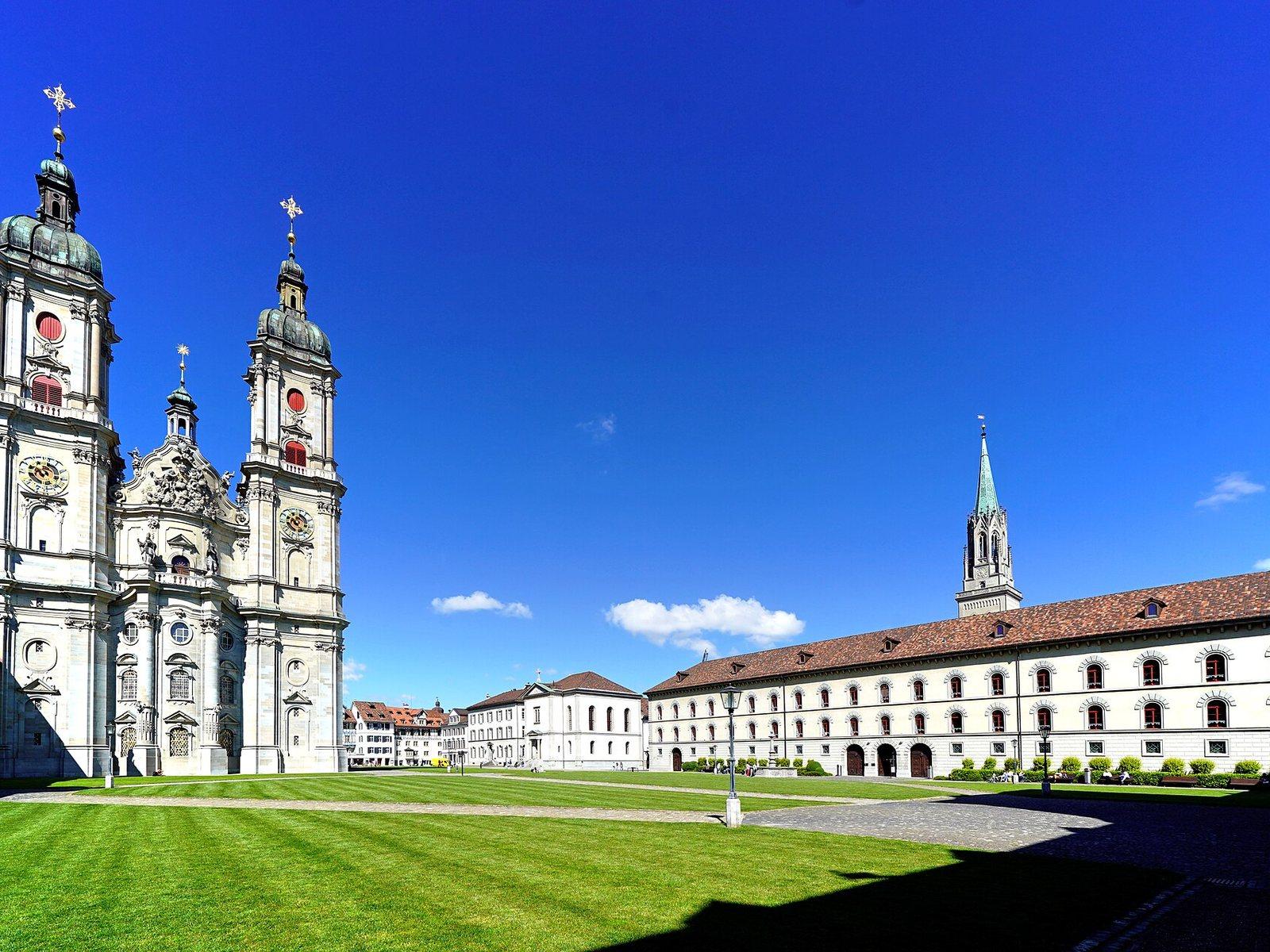
Photo (cropped): Rocky187, CC BY-SA 4.0, via Wikimedia Commons
- residents at the end of 2025 (Federal Statistical Office)
- 544,040
- of the population are foreign nationals (calculated, end of 2025)
- 27.2%
- in Switzerland: the canton is not in the 1983 agreement
- At source
- constituencies for the cantonal parliament (Constitution, art. 37)
- 8 Wahlkreise
10 sections≈ 13 min readSources checked on November 6, 2026
The interactive map
45 places marked: landmarks, museums, transport, restaurants, nights out and events. Tap a point to learn more.
Loading the map…
Places on the map (45)
Base map © swisstopo · Places: © OpenStreetMap contributors. When the map appears, your browser loads the tiles from the servers of the Swiss Confederation (swisstopo), which can see your IP address.
St. Gallen is a large canton in eastern Switzerland with 544,040 residents, stretched between Lake Constance (Bodensee), the Rhine valley (Rheintal), the Toggenburg, the Heidiland and Lake Zurich. Its capital is the city of St. Gallen, known for its UNESCO-listed Stiftsbezirk and its past as the capital of embroidery. It has no border with France and is not one of the eight cantons of the 1983 agreement: for a French cross-border worker this means you are taxed at source in Switzerland, on the ordinary scales, and not in France as in Basel or Neuchâtel.
This page gathers what you need to know to live, go out and work in the canton of St. Gallen: language, institutions, tax, transport, food and specialities, museums, nature, traditions. The figures come from official sources listed at the bottom of the page. Venues open, close and change their hours: always check with them before you travel. The interactive map further down places ten municipalities and some thirty sites, from Rorschach to Rapperswil and from Wil to Quinten.
1. St. Gallen at a glance
| Marker | What to know |
|---|---|
| Population | 544,040 residents at the end of 2025 (permanent resident population) |
| Foreign nationals | 147,947 people, or 27.2% |
| Capital | St. Gallen (79,487 residents, 34.6% foreign), capital of the canton (art. 1(4)) |
| Wahlkreise | St. Gallen (128,166), Rorschach (46,143), Rheintal (79,458), Werdenberg (43,008), Sarganserland (44,561), See-Gaster (72,608), Toggenburg (49,616), Wil (80,480) |
| Municipalities on the map | St. Gallen (79,487), Rapperswil-Jona (28,836), Wil (25,444), Gossau (18,943), Uzwil (14,676), Buchs (14,287), Altstätten (12,788), Rorschach (10,389; 52.5% foreign, the highest share on the list), Wattwil (9,262), Sargans (6,670) |
| Parliament | Kantonsrat of 120 members (art. 63), proportional representation in eight Wahlkreise (art. 37) |
| Government | Regierung of 7 members (art. 69), elected by majority vote, the canton forming a single constituency (art. 38) |
| Tax for a French cross-border worker | At source in Switzerland (outside the 1983 agreement) |
| Names that come up often | St. Gallen, Rorschach, Rapperswil, Rheintal, Toggenburg, Heidiland, Quinten |
The share of foreign nationals is calculated from the figures of the Federal Statistical Office table “Permanent resident population” (2025); the figures per Wahlkreis and per municipality come from the same table. The Constitution is dated 10 June 2001; the version we read is the one published with the status of 17 May 2009.
2. Language
The Constitution we read contains no article on the official language (it only guarantees freedom of language), so we do not state one. The official texts we read (Constitution, state web pages, tourist sites) are in German, and the contract, payslip and forms generally are too; people speak the Alemannic dialect. No main-language statistics were read, so we give no percentage of French speakers. For paperwork, count on German or English; with 27.2% foreign nationals (over 52% in Rorschach and 45% in Buchs) you will not be the only one not speaking the dialect, but that is not a rule.
3. How the canton is governed
| Institution | What the Constitution says |
|---|---|
| Right to vote | Swiss citizens aged 18 or over living in the canton (art. 31 and 32); they vote, sign initiatives and referendums and can be elected |
| Kantonsrat | 120 members (art. 63) by proportional representation in eight Wahlkreise (art. 37) |
| Regierung | 7 members (art. 69); elected by majority, like the members of the Council of States, the canton forming a single constituency (art. 38) |
| Terms of office | Four years (art. 59); the presidency of the Kantonsrat lasts one year, judges are elected for six years |
| Constitutional initiative | 8,000 voters (art. 41) |
| Legislative initiative | 6,000 voters (art. 42); the unified initiative (Einheitsinitiative) needs 4,000 (art. 43) |
| Mandatory vote | Constitution, treaties, rejected initiatives and new expenditure above the legal threshold (art. 48) |
| Optional referendum | 4,000 voters or one third of the Kantonsrat (art. 49), within 40 days (art. 50) |
A cross-border worker has no right to vote in the canton: they vote neither in cantonal or municipal elections nor in votes.
4. Working in St. Gallen as a cross-border worker
| Point | What we read |
|---|---|
| 1983 agreement | The Federal Council signed it on behalf of Bern, Solothurn, Basel-Stadt, Basel-Landschaft, Vaud, Valais, Neuchâtel and Jura: St. Gallen is not one of them |
| Fribourg tax office | According to its instructions, the agreement “only concerns” these eight cantons |
| Aargau | Its tax office describes the situation in a canton outside the agreement: French cross-border workers taxed on the ordinary scales (A, B, C, H), with a tax credit in France |
| St. Gallen tax authority | “Quellensteuer” page of the state website: the tax is withheld by the employer and paid to the cantonal office; cross-border workers and foreign employees without a C permit who are not married to a Swiss citizen or a C-permit holder are taxed at source |
| Declaration by the employer | Registration form sent to the cantonal office, with written confirmation of the scale; deadline: 8 days after the start of the job |
| Cross-border workers from Germany | Linear scale of 4.5% (codes L, M, N, P, Q) for daily return, i.e. a journey of at most 100 km or 1 h 30 by public transport: a rule specific to Germany that does not apply to French workers |
| Source-tax revision | In force since 1 January 2021; circular no. 45 of the Federal Tax Administration sets the calculation rules for all cantons |
| Cantonal minimum wage | Not read; check the collective agreement of your sector (see our guide on the CCNT) |
| Number of cross-border workers | Not read |
The details of your case (scale, deduction, 45 days, remote work, health insurance) depend on your situation: follow our guides rather than this page.
5. Getting around
| Means | What we read |
|---|---|
| St. Gallen main station | Bahnhofplatz; the Brauwerk restaurant, of the Schützengarten brewery, is right at the station |
| Mühleggbahn | Historic funicular linking, since 1893, the old town to the Drei Weieren, up to the St. Georgen district, in 90 seconds; once water-powered, now electric |
| Rapperswil | The Südostbahn's “Erlebnis Schloss Rapperswil” offer includes the return train trip, for instance from Zurich HB, and the castle admission |
| Gossau and the Walter Zoo | Regional bus 155 from Gossau station to the zoo, twice an hour during opening hours |
| Rorschach | The harbour is the start of bike and boat excursions on Lake Constance |
| Quinten | Car-free village: reached on foot or by boat only; the boat serves the hamlet of Quinten and Au |
We did not read a detailed network map, timetables or fares. Check your journey on the SBB website before choosing where to live.
6. Eating and drinking
| Place | What we read |
|---|---|
| St. Galler Bratwurst | Grilled since 1438; veal with pork fat, spices and fresh milk; four versions: classic (110 to 130 g), “noble” (over 50% veal), the Olma-Bratwurst (160 g) and the biggest (220 g); it is eaten without mustard, with a bread roll or a rösti with onion sauce |
| Brauerei Schützengarten | Founded in 1779, regarded as the oldest brewery in Switzerland; since 1895 its electricity comes from its own hydropower plant on the Sitter |
| Restaurant Brauwerk (Bahnhofstrasse 19) | Small brewery, restaurant, bar and park right at the station; home of Schützengarten's creative brewery |
| Zum Goldenen Schäfli (Metzgergasse 5) | Historic “Erststockbeizli”, Swiss specialities |
| Gaststuben zum Schlössli (Zeughausgasse 17) | The Zollikofersche Schlössli, near the Spisertor, described as a social centre |
| Schloss Wartegg (Rorschacherberg) | Organic restaurant described as “at the highest level” |
| Haus des Weins (Berneck) | Every Saturday, 11 am to 8 pm: about 20 producers and around 100 wines from the Rheintal, Sarganserland/Walensee and Lake Zurich |
| Säntis-Chäsi (Linden 4, Wittenbach) | Cheese dairy turning milk into cheese since 1895; raclettes and “Säntis Legère” |
| Wines of the canton | More than 20 grape varieties in the Rheintal; 30 wine-growing municipalities in the canton; from Pinot Noir and Müller-Thurgau to resistant (PIWI) varieties such as Cabernet Jura or Johanniter |
7. What to see and do
St. Gallen and around
| Place | What we read |
|---|---|
| Stiftsbezirk (Gallusstrasse) | UNESCO since 1983; Baroque cathedral of the mid-18th century, double-tower façade 68 m high; Stiftsbibliothek, Ausstellungssaal and Gewölbekeller closed 9 to 23 November 2026, new winter exhibition from 24 November |
| Stiftsbibliothek (Klosterhof 6d) | Oldest library in Switzerland: 170,000 books, 2,000 manuscripts from the Middle Ages; Rococo hall; 9th-century plan of the monastery |
| Kunstmuseum (Museumstrasse 32) | Neoclassical building of 1877 (Johann Christoph Kunkler); until 24 January 2027: “Beyond the Manosphere. Masculinities Today” |
| Naturmuseum (Rorschacher Strasse 263) | Museum with a park; exhibition “Der Fuchs – Meister der Anpassung”; anniversary weekend on 14 and 15 November 2026 |
| Textilmuseum (Kornhausstrasse 2) | Textile museum: around 1850 embroidery replaced cotton; opening hours not verified (site protected) |
| Lokremise (Grünbergstrasse 7) | Former steam-locomotive workshop: theatre, dance, cinema, art, restaurant |
| Drei Weieren | Three ponds from the 17th century, swimming, minigolf; Mülenenschlucht path from the old town |
By the lake, in the Rhine valley and beyond
| Place | What we read |
|---|---|
| Rorschach | Port on Lake Constance; 18th-century Kornhaus (museum, pile-dwelling models); Würth Haus; Seepark |
| Rheintal | More than 20 grape varieties, 450 km of paths, Festungsmuseum Heldsberg, Haus des Weins, Bergbahn Staubern |
| Rapperswil | “City of roses”; 13th-century castle, view from the tower, fallow deer since 1871 |
| Toggenburg | Klanghaus in Alt St. Johann: tours on Sunday afternoons (25 people), cowbell forge |
| Chocolarium (Flawil) | Munz and Minor chocolate factory: Tuesday to Friday 10-18, Saturday-Sunday 10-17; closed Monday |
| Heidiland | Taminaschlucht (winter break until early May 2027), Pizol, Flumserberg, spa water at 36.5 °C |
| Quinten | Car-free village on the Walensee, mild climate: vines, figs, kiwis |
| Walter Zoo (Gossau) | More than 1,000 animals, more than 100 species; 9-17 from November to February |
| Schloss Sargans, Schloss Werdenberg | Two castles of the Rhine valley and the Sarganserland |
8. Bars, nights out and venues
| Place | What we read |
|---|---|
| Restaurant Brauwerk | Brewery, bar and little park at the main station |
| Lokremise | Kinok cinema, theatre, dance; “Die Holländerinnen” on 20 November 2026; Brasserie Lok |
| Beer bars | The tourist site lists the Craft Beer & Cocktail Bar Al Capone, HERMANN Bier (brewery and pub) and BCB Bleisch Craft Beer, no address read |
| Kornhausbräu (Rorschach) | Brewery listed by the tourist site |
| Nordklang Festival | Saturday 13 February 2027, 7-11 pm |
| Concerts and parties | The tourist site's calendar lists more than 2,800 events (concerts, parties, theatre) |
No going-out hours (bars, clubs) were read: we kept only the venues whose website or page we read.
9. Traditions and highlights
| Event | When | What it is |
|---|---|---|
| Sternenstadt St. Gallen | 26 November to 24 December 2026 | Year-end event listed by the tourist site (programme not read) |
| Lichterfeier (Bad Ragaz) | 21 and 22 November 2026 | Festival of lights in the historic Dorfbadhalle |
| Samichläuse (Bad Ragaz) | 6 December 2026 | Entry of 40 Samichläuse around the bishop, a tradition over 60 years old |
| Fasnacht | 4 to 9 February 2027 | St. Gallen carnival |
| OFFA | 21 to 25 April 2027 | 49th spring fair at the Olma Messen |
| St.Gallen Symposium | 28 and 29 April 2027 | Intergenerational conference at the university |
| Longines CSIO | 3 to 6 June 2027 | Show jumping, Gründenmoos |
| OpenAir St.Gallen | 1 to 4 July 2027 | Festival in the Sittertobel, since 1977 |
| OLMA | Every autumn | Agricultural fair born in 1941; 2027 date not read |
Sources
- Constitution of the canton of St. Gallen (111.1): version of 17 May 2009; art. 1, 31, 32, 37, 38, 41 to 43, 48 to 50, 59, 63, 69. Text in German.
- Federal Statistical Office: permanent resident population (table px-x-0102010000_101, 2025): population, foreign nationals, Wahlkreise, municipalities.
- Agreement of 11 April 1983 on the taxation of cross-border workers; Fribourg tax office: “source tax” instructions; Aargau tax office: leaflet on taxing cross-border workers.
- Canton of St. Gallen: source tax and frequently asked questions.
- Site guides, checked against official sources: G permit, contract and salary (CCNT).
- St.Gallen-Bodensee Tourismus: Stiftsbezirk, Bratwurst, beer, wine, Drei Weieren, textiles, Rorschach, Rheintal, events; Stiftsbezirk; Kunstmuseum; Naturmuseum; Lokremise.
- Brauerei Schützengarten; Säntis AG; Chocolarium; Walter Zoo; Klangwelt Toggenburg; Schloss Sargans; Quinten.
- Rapperswil-Zürichsee; Heidiland; Olma Messen; OpenAir St.Gallen.
- Map coordinates: © OpenStreetMap contributors; base map © swisstopo.
Want to work in St. Gallen?
Browse the canton's job listings, or discover the programme that prepares you for the application, the interview and the employment contract.
Switzerland — all 26 cantons