🇨🇭 Canton guide
Thurgau: living, going out and working in the canton
Everything about the canton of Thurgau: institutions, tax for cross-border workers (outside the 1983 agreement), Lake Constance, Arenenberg and Napoleon III, the Kartause Ittingen, Frauenfeld, and an interactive map.
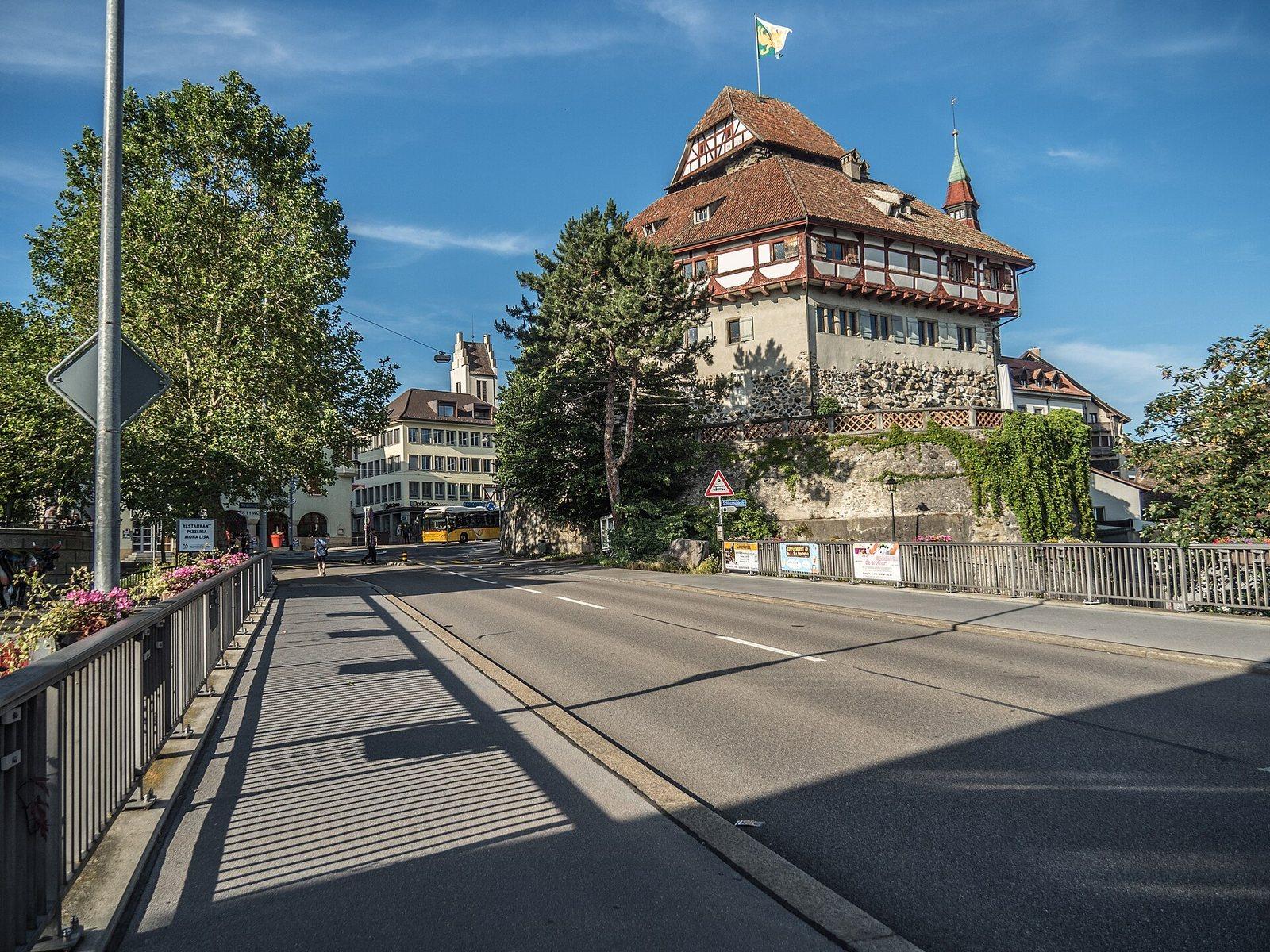
Photo (cropped): Jag9889, CC BY-SA 4.0, via Wikimedia Commons
- residents at the end of 2025 (Federal Statistical Office)
- 302,806
- of the population are foreign nationals (calculated, end of 2025)
- 27.9%
- in Switzerland: the canton is not in the 1983 agreement
- At source
- in the Grand Council, elected by proportional representation by district (Constitution, § 34 and § 20)
- 130 members
10 sections≈ 12 min readSources checked on November 6, 2026
The interactive map
30 places marked: landmarks, museums, transport, restaurants, nights out and events. Tap a point to learn more.
Loading the map…
Places on the map (30)
Base map © swisstopo · Places: © OpenStreetMap contributors. When the map appears, your browser loads the tiles from the servers of the Swiss Confederation (swisstopo), which can see your IP address.
Thurgau is a canton in eastern Switzerland with 302,806 residents, stretching along Lake Constance (Bodensee), the Untersee and the Rhine, with the Arenenberg castle where Napoleon III lived, the Kartause Ittingen and the harbour of Arbon. Its capital is Frauenfeld and it has 80 municipalities in five districts. It has no border with France (but touches Germany, at Konstanz) and is not one of the eight cantons of the 1983 agreement: for a French cross-border worker this means you are taxed at source in Switzerland, on the ordinary scales, and not in France as in Basel or Neuchâtel. The cantonal tax authority describes cross-border workers from Germany, Austria and Liechtenstein, not from France: the situation of a French worker is deduced.
This page gathers what you need to know to live, go out and work in the canton of Thurgau: language, institutions, tax, transport, food, museums, nature, traditions. The figures come from official sources listed at the bottom of the page. Venues open, close and change their hours: always check with them before you travel. The interactive map further down places sixteen municipalities and about fifteen sites, from Diessenhofen to Arbon. The cantonal tourism site (thurgau-bodensee.ch) refuses automated reads and was not circumvented.
1. Thurgau at a glance
| Marker | What to know |
|---|---|
| Population | 302,806 residents at the end of 2025 (permanent resident population) |
| Foreign nationals | 84,459 people, or 27.9% |
| Capital | Frauenfeld (27,201 residents, 27.9% foreign), the “Hauptort” (§ 33) |
| Districts (FSO) | Frauenfeld (74,150), Arbon (62,844), Weinfelden (60,886), Kreuzlingen (53,412), Münchwilen (51,514) |
| Municipalities on the map | Frauenfeld (27,201), Kreuzlingen (23,550; 57.2%), Arbon (16,407; 36.7%), Amriswil (15,225), Weinfelden (12,652), Romanshorn (11,982), Aadorf (9,924), Sirnach (8,387), Bischofszell (6,438), Münchwilen (6,043), Tägerwilen (5,558; 40.2%), Diessenhofen (4,157; 39.6%), Steckborn (4,036), Salenstein (1,502), Warth-Weiningen (1,467), Berlingen (941) |
| Parliament | Grand Council of 130 members (§ 34), proportional representation, one district = one constituency (§ 20); it sits in summer in Frauenfeld, in winter in Weinfelden (§ 33) |
| Government | Regierungsrat of 5 members (§ 41), elected by majority vote, the canton forming one constituency (§ 20) |
| Tax for a French cross-border worker | At source in Switzerland (outside the 1983 agreement), situation deduced |
| Names that come up often | Frauenfeld, Kreuzlingen, Arbon, Arenenberg, Kartause Ittingen, Untersee |
The share of foreign nationals is calculated from the Federal Statistical Office table “Permanent resident population” (2025); the figures per district and per municipality come from the same table. The Constitution is dated 16 March 1987 and has been in force since 1 January 1990; the version we read is the one with the status of 15 June 2026.
2. Language
The Constitution we read contains no article on the official language, so we do not state one. The official texts we read (Constitution, Steuerpraxis, institutions' sites) are in German, and the contract, payslip and forms generally are too; people speak the Alemannic dialect. No main-language statistics were read, so we give no percentage of French speakers. For paperwork, count on German or English; with 27.9% foreign nationals (57.2% in Kreuzlingen) you will not be the only one not speaking the dialect, but that is not a rule. A French touch: the Arenenberg site calls its restaurant the “Bistro Louis Napoléon” and offers a giant Provençal crib at Christmas.
3. How the canton is governed
| Institution | What the Constitution says |
|---|---|
| Right to vote | Swiss citizens aged 18 or over living in the canton, unless under guardianship for mental illness or weakness (§ 18) |
| Elections | At the ballot box: Grand Council (the district is the constituency), Regierungsrat and members of the Council of States (the canton is the constituency), district courts and justices of the peace (§ 20); proportional representation for the Grand Council, majority vote for the rest |
| Grand Council | 130 members (§ 34); sits in Frauenfeld in summer, in Weinfelden in winter (§ 33) |
| Regierungsrat | 5 members (§ 41); decides with at least three members, as a collegiate body |
| Terms of office | Four years (§ 32) |
| Popular initiative | 4,000 voters, collection period of six months (§ 26); a counter-proposal is possible with a vote on both texts (§ 27) |
| Referendum on laws | 30 Grand Council members or 2,000 voters within three months (§ 22) |
| Financial referendum | Mandatory above CHF 6 million (one-off) or CHF 1.2 million a year; optional (2,000 voters) above CHF 2 million or CHF 400,000 a year (§ 23) |
| Recall | 20,000 voters can demand the recall of the Grand Council or the government (§ 25) |
| Districts | Five districts (§ 56) |
A cross-border worker has no right to vote in the canton: they vote neither in cantonal or municipal elections nor in votes.
4. Working in Thurgau as a cross-border worker
| Point | What we read |
|---|---|
| 1983 agreement | The Federal Council signed it on behalf of Bern, Solothurn, Basel-Stadt, Basel-Landschaft, Vaud, Valais, Neuchâtel and Jura: Thurgau is not one of them |
| Fribourg tax office | According to its instructions, the agreement “only concerns” these eight cantons |
| Aargau | Its tax office describes the situation in a canton outside the agreement: French cross-border workers taxed on the ordinary scales (A, B, C, H), with a tax credit in France |
| Thurgau Steuerpraxis | A person who works in Switzerland with a residence abroad (cross-border worker, weekly or short-stay) is taxed at source on their wages (§ 109 to 112), even with Swiss nationality or a C permit; the power to tax cross-border workers depends first on the double-taxation treaties |
| Special sheets | The Steuerpraxis treats cross-border workers from Germany, Austria and Liechtenstein separately; no sheet for France was read |
| Permits and tax | Holders of B, L, F, N permits, G permits with weekly return and people in the notification procedure (up to 90 days a year) are taxed at source |
| Notification procedure | The employer reports the hire within 8 days of the start of work |
| International weekly residence | A cross-border worker whose centre of life stays abroad but who cannot return every day (a home in Switzerland, weekly return) may fall under weekly residence: the canton of residence is then competent |
| Subsequent ordinary assessment | People resident abroad can request it until 31 March of the following year if their situation is that of a resident (“quasi-residence”) |
| Cantonal minimum wage | Not read; check the collective agreement of your sector (see our guide on the CCNT) |
| Number of cross-border workers | Not read |
The details of your case (scale, deduction, 45 days, remote work, health insurance) depend on your situation: follow our guides rather than this page.
5. Getting around
| Means | What we read |
|---|---|
| Arbon harbour | 650 berths and 30 visitor berths: one of the largest harbours on the Swiss shore of Lake Constance |
| Lakeshore | Arbon, Romanshorn and Kreuzlingen are lakeside municipalities; no boat timetable was read |
| Frauenfeld and Weinfelden | The Grand Council sits in Frauenfeld in summer and in Weinfelden in winter (§ 33); no network map read |
| Arenenberg | An estate in Salenstein above the Untersee; how to get there not read |
We did not read a detailed network map, timetables or fares. Check your journey on the SBB website before choosing where to live.
6. Eating and drinking
| Place | What we read |
|---|---|
| Bistro Louis Napoléon (Arenenberg 1) | Slow Food bistro, daily 11-18, a daily menu at lunch; products from the estate farm; evenings on request for groups of 15 or more |
| Weingut Arenenberg | North-west-facing Untersee vineyard, wine pressed on site since Napoleon's time; developed by Hortense de Beauharnais from 1817; Pinot Noir, blends, fruity whites, spirits |
| Restaurant Mühle (Kartause Ittingen) | Seasonal, regional cooking in the monastic tradition of self-sufficiency: the estate's cheese dairy, butcher, bakery, garden, fish farm and vineyard |
| Arbon Hafenkiosk | A harbour kiosk, named by the town |
| Arenenberg Advent brunch | On 6, 13 and 20 December 2026: a regional, seasonal brunch, pastries mostly homemade |
No list of valley restaurants was read for this canton and no culinary speciality is cited for lack of a source: better no dish than the wrong one.
7. What to see and do
Arenenberg and the Untersee
| Place | What we read |
|---|---|
| Napoleonmuseum Arenenberg | Castle museum where Queen Hortense, Napoleon III and Empress Eugénie lived; still furnished as originally; April-September daily 10-17, October-March Tuesday to Sunday 10-17 (last entry 16:00); closed from 21 December 2026 to 5 February 2027 |
| Gift of 1906 | Empress Eugénie gave the whole estate to the canton of Thurgau on 9 May 1906 |
| Park and view | A park with a view described as “breathtaking” over the Untersee; hotel and bistro on the estate |
| Christmas at the Arenenberg | Giant Provençal crib in the castle, decorations, Advent brunches |
Kartause Ittingen, Arbon and Frauenfeld
| Place | What we read |
|---|---|
| Kartause Ittingen (Warth) | Monastery founded around 1150; Augustinian canons until the mid-15th century, Carthusians from 1461; hotel, restaurant, Klosterladen, gardens |
| Ittinger Museum | May-September daily 11-18; October-April Monday-Friday 14-17, Saturday-Sunday 11-17 |
| Kunstmuseum Thurgau | The canton's art museum, in the Kartause, same hours |
| Saurer Museum (Weitegasse 8, Arbon) | About twenty historic vehicles (lorries, buses, military vehicles, fire engines), engines, embroidery and weaving machines; daily 10-18, public holidays included; CHF 10, free for accompanied children under 16 |
| Arbon Classics | Historic-mobility festival (10th edition on 30 and 31 May 2026); 2027 dates not read |
| Frauenfeld | Capital; Cinema Luna, Openair |
8. Bars, nights out and venues
| Place | What we read |
|---|---|
| Cinema Luna (Lindenstrasse 10, Frauenfeld) | Cinema; film evening “Freedom – Le destin de Shewit” on 3 November 2026 |
| Ittinger Sonntagskonzerte (Kartause Ittingen) | 25th season from 1 November 2026: five chamber-music concerts with young musicians |
| Openair Frauenfeld | 8 to 10 July 2027; Bonez MC & RAF Camora announced |
| Kartause cultural programme | “Ittinger Sternstunden”, afternoon tea: details not read |
No list of bars or clubs was read for this canton, and no going-out hours: we kept only the venues whose website we read.
9. Traditions and highlights
| Event | When | What it is |
|---|---|---|
| Ittinger Sonntagskonzerte | From 1 November 2026 | 25th season, five chamber-music concerts |
| Advent brunch at the Arenenberg | 6, 13 and 20 December 2026 | Regional brunch, wine tastings, guided tours and music |
| Napoleonmuseum closed | 21 December 2026 to 5 February 2027 | The museum's winter break |
| Arbon Classics | End of May | Historic mobility on road, rail, water and in the air; 2027 date not read |
| Openair Frauenfeld | 8 to 10 July 2027 | Festival on the Frauenfeld Allmend |
Sources
- Constitution of the canton of Thurgau (101): status of 15 June 2026; § 18, 20, 22 to 27, 32 to 34, 41, 56. Text in German.
- Federal Statistical Office: permanent resident population (table px-x-0102010000_101, 2025): population, foreign nationals, districts, municipalities.
- Agreement of 11 April 1983 on the taxation of cross-border workers; Fribourg tax office: “source tax” instructions; Aargau tax office: leaflet on taxing cross-border workers.
- Thurgau Steuerpraxis: StP 109 Nr. 1, liability to source tax; StP 114 Nr. 1, people resident abroad.
- Site guides, checked against official sources: G permit, contract and salary (CCNT).
- Arenenberg: Napoleonmuseum, Weinwelt, Advent, Bistro.
- Kartause Ittingen: history, Ittinger Museum, Kunstmuseum Thurgau, Sonntagskonzerte, Restaurant Mühle.
- Saurer Museum; town of Arbon: harbour; town of Frauenfeld; town of Kreuzlingen; municipality of Weinfelden; Openair Frauenfeld.
- Map coordinates: © OpenStreetMap contributors; base map © swisstopo.
Want to work in Frauenfeld?
Browse the canton's job listings, or discover the programme that prepares you for the application, the interview and the employment contract.
Switzerland — all 26 cantons