🇨🇭 Canton guide
Vaud: living, going out and working in the canton
Everything about the canton of Vaud: languages, politics, transport, food and specialities, museums, clubs, festivals, tax for cross-border workers, and an interactive map of Lausanne, Lavaux and Lake Geneva.
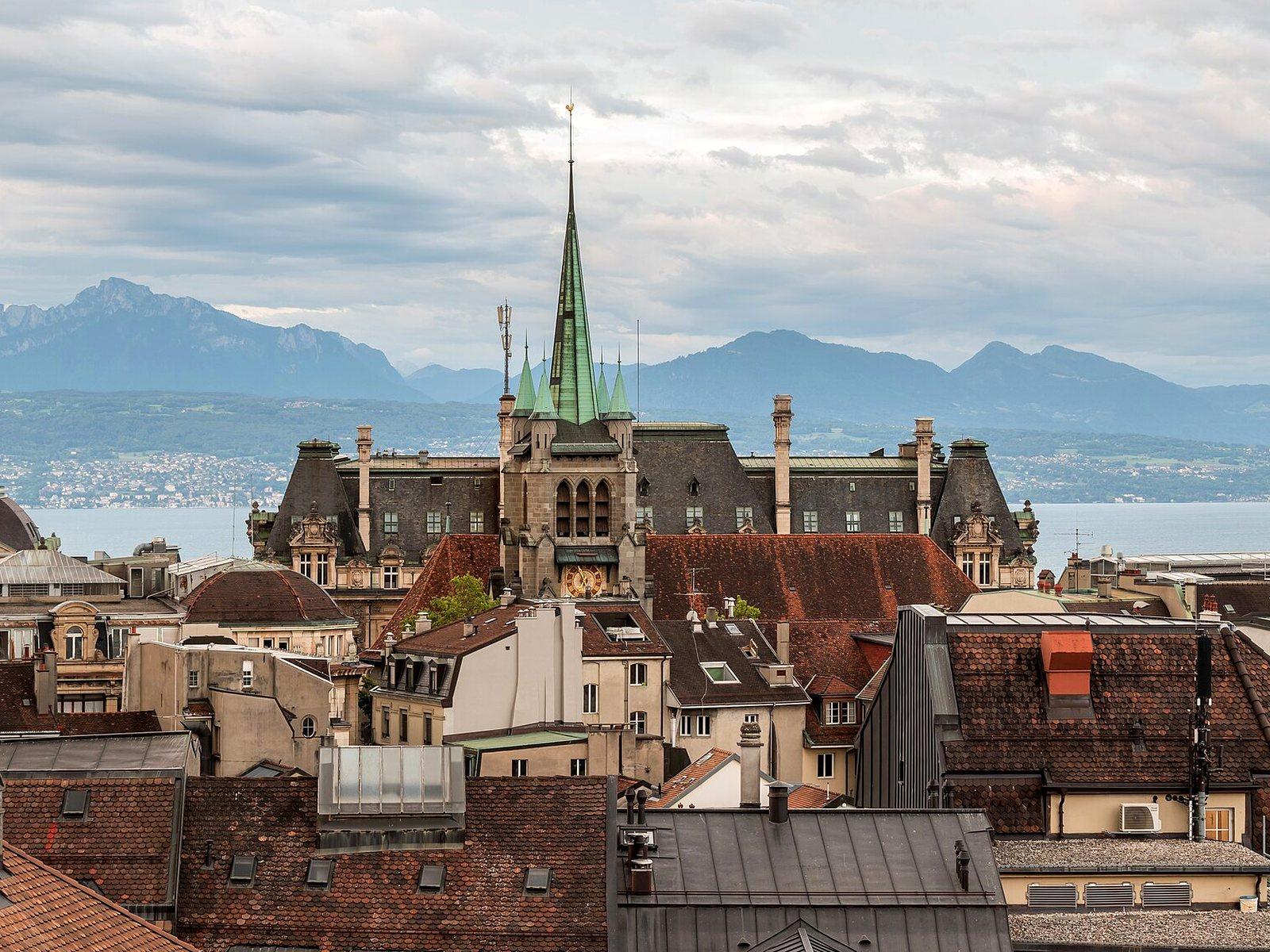
Photo (cropped): Krzysztof Golik, CC BY-SA 4.0, via Wikimedia Commons
- residents at 31 December 2025 (Statistique Vaud)
- 864,200
- cross-border workers with a G permit working in the canton (Statistique Vaud)
- ≈ 45,900
- where you are taxed: Vaud is one of the eight cantons of the 1983 agreement
- In France
- official language (Vaud Constitution, art. 3)
- French
10 sections≈ 16 min readSources checked on November 6, 2026
The interactive map
39 places marked: landmarks, museums, transport, restaurants, nights out and events. Tap a point to learn more.
Loading the map…
Places on the map (39)
Base map © swisstopo · Places: © OpenStreetMap contributors. When the map appears, your browser loads the tiles from the servers of the Swiss Confederation (swisstopo), which can see your IP address.
Vaud is the French-speaking canton of Lake Geneva: from Coppet and Nyon to Montreux, by way of Lausanne, Morges, Vevey and the vineyards of Lavaux. Its capital, Lausanne, is the fourth city of Switzerland and the Olympic capital. For anyone working in hospitality it is also a canton where a cross-border worker is taxed in France, not in Switzerland: a rule that changes everything about how you sign your contract.
This page gathers what you need to know to live, go out and work in the canton of Vaud: languages, politics, transport, food and specialities, museums, clubs, festivals. Every figure comes from an official source cited at the bottom. Venues open, close and change their hours: always check with the venue before you travel. The interactive map on the page marks the places mentioned.
1. Vaud at a glance
| Fact | What to know |
|---|---|
| Capital | Lausanne, fourth city of Switzerland and Olympic capital |
| Population | 864,200 residents on 31 December 2025 (+8,500, or +1.0%, in 2025) |
| Foreign nationals | 34% of residents (the foreign population grows faster than the Swiss one: +1.8% against +0.6%) |
| Cross-border workers | About 45,900 G-permit holders working in the canton, almost all living in France; two thirds in the districts of Jura-Nord vaudois, Nyon and Lausanne |
| Official language | French (Vaud Constitution, art. 3) |
| Cross-border worker tax | In France (1983 agreement) |
| Places that come up often | Lausanne (Cité, Flon, Ouchy), Lavaux, Montreux and Chillon, Vevey, Nyon |
Lausanne has been home to the International Olympic Committee for a hundred years, and the canton's cultural and night life is concentrated around it. The rest of the territory stretches along the lake, through the Lavaux vineyards and into the Jura.
2. Languages
French is the canton's official language: article 3 of the Vaud Constitution says it in one sentence (“The official language of the canton is French”). It is the language of the administration, of public schools and of the employment contracts you will sign.
With 34% foreign nationals among its residents, Vaud nevertheless welcomes many languages and nationalities, especially in the Lausanne area and on the Riviera.
3. How the canton is governed
Vaud has its own institutions, set by its Constitution of 14 April 2003.
| Institution | Role | Composition and election |
|---|---|---|
| Grand Council | The parliament | 150 members, elected every 5 years by proportional representation (art. 92 and 93) |
| Council of State | The government | 7 members, elected every 5 years, at the same time as the Grand Council, by a two-round majority system (art. 113 and 114) |
Popular rights let residents propose or reject texts:
- Popular initiative: 12,000 signatures within four months (18,000 if it aims at a total revision of the Constitution) (art. 79).
- Optional referendum: 12,000 signatures within sixty days of the publication of the act (art. 84).
Who can vote? The cantonal electorate is reserved for Swiss citizens domiciled in the canton (art. 74). Foreign nationals can vote at municipal level if they have lived in Switzerland for at least ten years with a permit and have been domiciled in the canton for at least three years (art. 142).
4. Working in Vaud as a cross-border worker
- Tax: in France. Vaud is one of the eight cantons of the 1983 agreement (Vaud, Valais, Neuchâtel, Jura, Bern, Basel-City, Basel-Country, Solothurn). You are taxed in France like any French employee: your Swiss employer pays your salary without tax withheld at source if it holds your 2041-AS certificate, which you give it before taking up your duties, then every year before 1 January. Without it, the employer withholds Swiss tax.
- To stay in this regime: no more than 45 nights a year in Switzerland for a full-time job, and a commute of at most three hours a day, round trip included (beyond that, you must be able to prove that you go home every day without exceeding 45 nights).
- The compensation between states: France pays the eight cantons 4.5% of the gross payroll of their cross-border workers. It is a mechanism between states, with no direct effect on your salary or your tax.
- Remote working: up to 40% of your annual working time from France, the regime does not change. Beyond that, you leave the cross-border regime and your whole remuneration is taxed under the general rules of the 1966 treaty.
- G permit in Vaud: a cross-border authorisation is issued if the activity lasts more than three months; below that, notification of taking up work is made online on the website of the State Secretariat for Migration. The competent authority is the Population Service; new permits have been in card format since 1 July 2021.
- Hospitality collective agreement (CCNT): its minimums run from CHF 3,713 to 5,293 gross a month in 2026 depending on qualification (CHF 4,528 with a CFC), full-time.
- Cantonal minimum wage: we could not confirm, on an official Vaud website, that the canton has a statutory minimum wage of its own. Rely on what your contract and the CCNT provide, and ask the cantonal administration if in doubt.
5. Getting around
| Mode | What it is | Good to know |
|---|---|---|
| Mobilis | The Vaud fare community: “train, bus, metro and funicular across the whole canton of Vaud” | A single ticket is valid with all the operators of a zone |
| tl (Lausanne) | The public transport of the Lausanne region: metro, buses and trolleybuses | Details on t-l.ch |
| Léman Express | Cross-border rail network: 6 lines and 45 stations | It links Geneva, Haute-Savoie, the Ain and the canton of Vaud, from Coppet |
| Trains (SBB) | Lausanne station, a short walk from Plateforme 10 | Timetables on the SBB website |
| Boats (CGN) | The Belle Époque fleet of Lake Geneva | Serves the lakeshore: Ouchy, Montreux, Vevey, Nyon, Morges, Rolle, Geneva, Évian… |
| Car | The motorway vignette is compulsory | CHF 40, valid from 1 December 2025 to 31 January 2027 |
A few markers: the Lausanne City Pass (from CHF 30, one to three days) covers attractions in the city and region, and the Lausanne Transport Card gives 20% off at several museums. The CGN evening cruises run every Friday from 6 November to 11 December 2026, and lunch cruises every Sunday and public holiday. Fares change often: check them on mobilis-vaud.ch.
6. Eating and drinking
The specialities to know
- The papet vaudois: a mixture of potatoes and leeks cooked in water and white wine, served with the cabbage sausage. It is eaten today from mid-September to April.
- The Vaud cabbage sausage PGI (saucisse aux choux vaudoise): a pork and cabbage sausage, cold-smoked, part of the papet vaudois. Legend traces it to the year 879, when the family of the Emperor of Germany stayed at Orbe and cabbage was added to stretch the filling. It is recognised by its green seal, and its production area is the canton of Vaud.
- The Vaud saucisson PGI: pork and bacon fat, with salt and pepper as the main spices, cold-smoked. It is enjoyed cooked with traditional dishes, or dry as a snack with bread. The pork comes from all over Switzerland.
- Fondue: the speciality of Lausanne tables (see below), with variations made with Gruyère and Vacherin Fribourgeois, or with morels and cognac.
- Lavaux wine: the vineyard terraces are UNESCO-listed and the cellars offer tastings (a Lausanne Tourisme offer gives three estate wines from CHF 19).
Where to try them
| Address | Where | What you find there |
|---|---|---|
| Café de l'Évêché | At the foot of the old town, with a view of the cathedral | 13 fondues to choose from, including a 100% Vacherin Fribourgeois version served in a bread “hat” |
| Café Romand | Place Saint-François | A bistro open since 1951: from four people, a half-and-half fondue (Gruyère and Vacherin Fribourgeois) |
| Café du Vieil Ouchy | Near the lake | Cheese fondue, exposed beams, a lakeside terrace in summer |
| La Pinte Besson | Rue Neuve | Described as the oldest café in Lausanne: fondue with morels and cognac |
| Le Chalet Suisse | Above Lausanne | Ten fondues, a chalet decor with a large fireplace and cowbells |
| L'Étoile Blanche | Place Benjamin-Constant | A café-restaurant described as a “mythical spot” |
| La Guinguette de Vidy | Vidy, on the lakeshore | A terrace bar: deck chairs under lime trees, hot dogs |
| Les Jardins | At the foot of the cathedral ramparts | A garden terrace described as a charming French garden |
Lausanne Tourisme also names wine bars (Caveau Corto, Street Cellar, Vintage Wine Bar, Ta Cave, Pif'Bistrot), the Brasserie du Château (Lausanne's first craft brewery, founded in 1997), the terrace of the Domaine du Burignon (regional wines with a view) and the King Size Pub, described as the largest pub in French-speaking Switzerland.
7. What to see and do
The essentials
- Lausanne Cathedral: a masterpiece of Gothic architecture, built between the 12th and 13th centuries and consecrated in 1275. Every night, from 10 pm to 2 am, the watchman calls the hours from the tower, a tradition more than 600 years old. Entry to the cathedral is free; the tower costs CHF 6 for an adult. The rose window of the south transept is inaccessible until spring 2027 (vault works).
- Ouchy and the lake: the waterfront district, with the Château d'Ouchy and the old harbour.
- The Flon and the Cité: the two faces of Lausanne, the avant-garde district and the old town, listed by Lausanne Tourisme among the neighbourhoods to visit along with Place de la Palud.
- Lavaux: the UNESCO-listed vineyard terraces, with marked trails; Lutry is only about five minutes from Lausanne by train, Saint-Saphorin and Grandvaux are other villages to explore.
- Chillon Castle, at Veytaux (Montreux): presented as Switzerland's most visited historical monument. Open all year except 1 January and 25 December; adult entry is CHF 15.
- Sauvabelin Park and AQUATIS (aquarium-vivarium), in Lausanne.
Museums
| Museum | What you see |
|---|---|
| The Olympic Museum | Quai d'Ouchy 1: the origin of the Games, the competitions and the athletic spirit, with athletes' equipment. Founded in 1993, renovated in 2013; open Tuesday to Sunday, 9 am to 6 pm; CHF 20 adult entry |
| Plateforme 10 | Near the station: three cantonal museums, the MCBA (fine arts), the mudac (design and applied arts) and Photo Élysée (photography), with a combined ticket. The MCBA is closed on Mondays, the mudac and Photo Élysée on Tuesdays |
| Collection de l'Art Brut | Avenue des Bergières 11, in an 18th-century château: the works of self-taught artists gathered by Jean Dubuffet. Tuesday to Sunday; free admission on the first Saturday of the month |
8. Clubs, bars and nights out
The City of Lausanne publishes the list of its nightlife venues, and Lausanne Tourisme gathers nearly fifty bars. The list is not exhaustive: nightlife addresses open and close quickly.
| Address | Type | Where |
|---|---|---|
| MAD | A club of five floors, four dancefloors and a restaurant; ranked among the world's 100 best clubs by DJ Mag | Flon, Rue de Genève |
| Les Docks | Concert hall (rock, hip-hop, funk, folk) and exhibitions | Near the Flon, Sévelin district |
| Le Romandie | A rock club run since 2004 by a non-profit association | Place de l'Europe |
| Les Jumeaux Jazz Club | Contemporary jazz, capacity 300: concerts, jam sessions, DJ nights | Flon |
| D! Club | A former theatre, later a cinema, then a club known for the quality of its programme | Place des Pionnières |
| Folklor | The former “Ruche”, an underground electro club with vinyl mixes | Rue des Deux-Marchés |
| Jagger's | A rock-oriented club | Rue Etraz |
| Le XIIIe siècle | A bar-club in 13th-century cellars: two bars, a dancefloor, open seven days a week | La Cité, near the cathedral |
| La Cave du Bleu Lézard | A cellar venue with entertainment all year round | Rue Jenny-Enning |
| Le Bourg | A former cinema turned café-theatre: concerts, DJ sets, screenings | Rue de Bourg |
| La Brèche | A small, intimate venue under the arches of the Grand-Pont | Grand-Pont |
| Movida | A Latin dancing bar: salsa, kizomba, bachata | Place Chauderon |
| Buzz Club | A club playing all styles, open seven days a week | Rue Enning |
| Chorus | A jazz venue where the audience sits close to the stage | Lausanne |
Bars named by Lausanne Tourisme: LP's Bar (Lausanne Palace, the “Place to be”), Le Vestibule (speakeasy with original cocktails), Lausanne Cocktail Club, Giraf Bar (Vieux Lausanne, festive), Le Lapin Vert (rock bar), Le Punk (baroque decor) and Bulldog Bar (Flon), McCarthy's (Irish pub), Les Brasseurs and Trois14 (craft beers). Rooftops: the Sky Rooftop of the Royal Savoy (renovated in May 2026) and The MadHouse Rooftop.
9. Festivals and highlights
| Event | When | What it is |
|---|---|---|
| Festival de la Cité | 6 to 11 July 2027 (55th edition; the 54th ran from 30 June to 5 July 2026) | Shows, multimedia content and food stands, with “La Cité des enfants”; entirely free |
| Montreux Jazz Festival | 2 to 17 July 2027 (61st edition; the 60th lasted sixteen days in 2026) | Founded in 1967 by Claude Nobs; the 60th edition was the first at the renovated Congress Centre |
| Paléo Festival Nyon | 19 to 25 July 2027 (the 49th edition ran from 21 to 26 July 2026) | In Nyon, Route de Saint-Cergue; seven days, exceptionally, to mark the 50th anniversary |
| Fête des Vignerons | No date announced on the site | Held “once per generation” in Vevey; on UNESCO's intangible cultural heritage list since 2016 (the most recent edition the site presents is 2019) |
Other events are named by Lausanne Tourisme, dates to be found on its calendar: the Lausanne Bach Festival, Montreux Comedy and La Revue de Lausanne.
Sources
- Constitution of the Canton of Vaud (RSV 101.01), consolidated version “as of 18 June 2023”: art. 3, 74, 79, 84, 92, 93, 113, 114, 142. The figures (150 members, 12,000 signatures, 60 days) were also cross-checked against the 2019 consolidated version on lexfind.ch.
- Statistique Vaud, Numerus 3/2026 press release: “Vaud population up by 8,500 in 2025”: 864,200 residents, 34% foreign nationals.
- Statistique Vaud, foreign active persons: about 45,900 cross-border workers, two thirds in three districts.
- Site guides, checked against official sources: cross-border tax (1983 agreement, 2041-AS certificate, 45 nights, 4.5% compensation, 40% remote working), G permit (Vaud), transport and passes, contract and salary (CCNT).
- Lausanne Tourisme: highlights, the cathedral, the Olympic Museum, Plateforme 10, the Collection de l'Art Brut, Lavaux, bars and terraces, fondue in Lausanne, getting around, nights out, events.
- City of Lausanne, nightlife: the list of 14 venues.
- Mobilis Vaud; CGN; Château de Chillon.
- Swiss AOP-IGP Association, Vaud cabbage sausage leaflet and Vaud saucisson leaflet; State of Vaud, intangible heritage inventory: papet vaudois.
- Festivals: Festival de la Cité, Montreux Jazz Festival, Paléo, Fête des Vignerons.
- Map coordinates: © OpenStreetMap contributors, checked address by address; base map © swisstopo.
Want to work in Lausanne?
Browse the canton's job listings, or discover the programme that prepares you for the application, the interview and the employment contract.
Switzerland — all 26 cantons